PROMISE TO PREVAIL
Preparing your experience
PROMISE TO PREVAIL
Preparing your experience
MOBILE UI / UX CONCEPT
A calmer space to capture and revisit dreams.
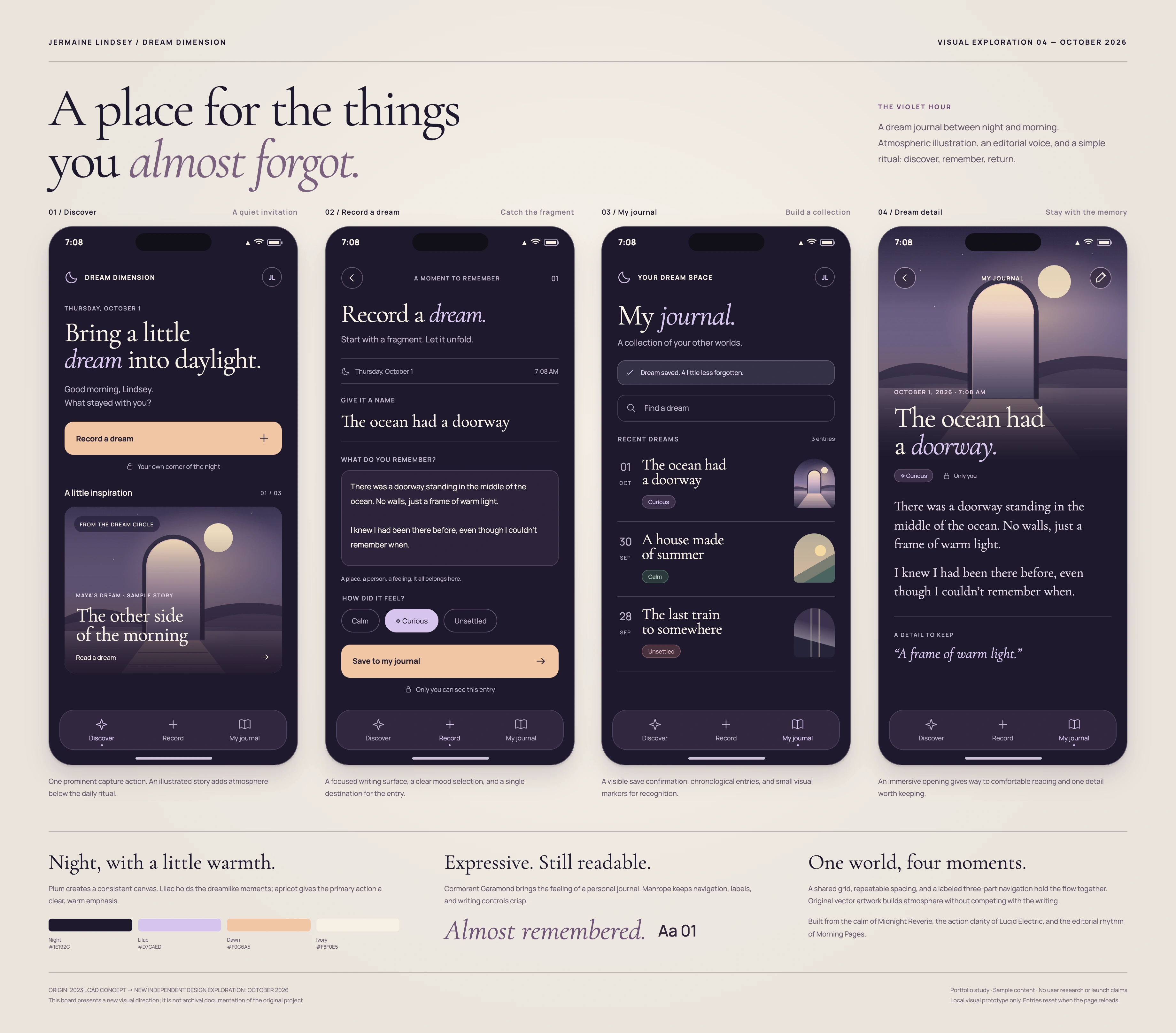
The latest exploration pairs plum surfaces, an expressive serif and warm capture actions. You can record and edit a dream, select a mood, search your journal and export your entries.
This portfolio demo saves entries in your browser on this device. It has no account, cloud synchronization or sharing service. Anyone with access to the same browser can read its journal.
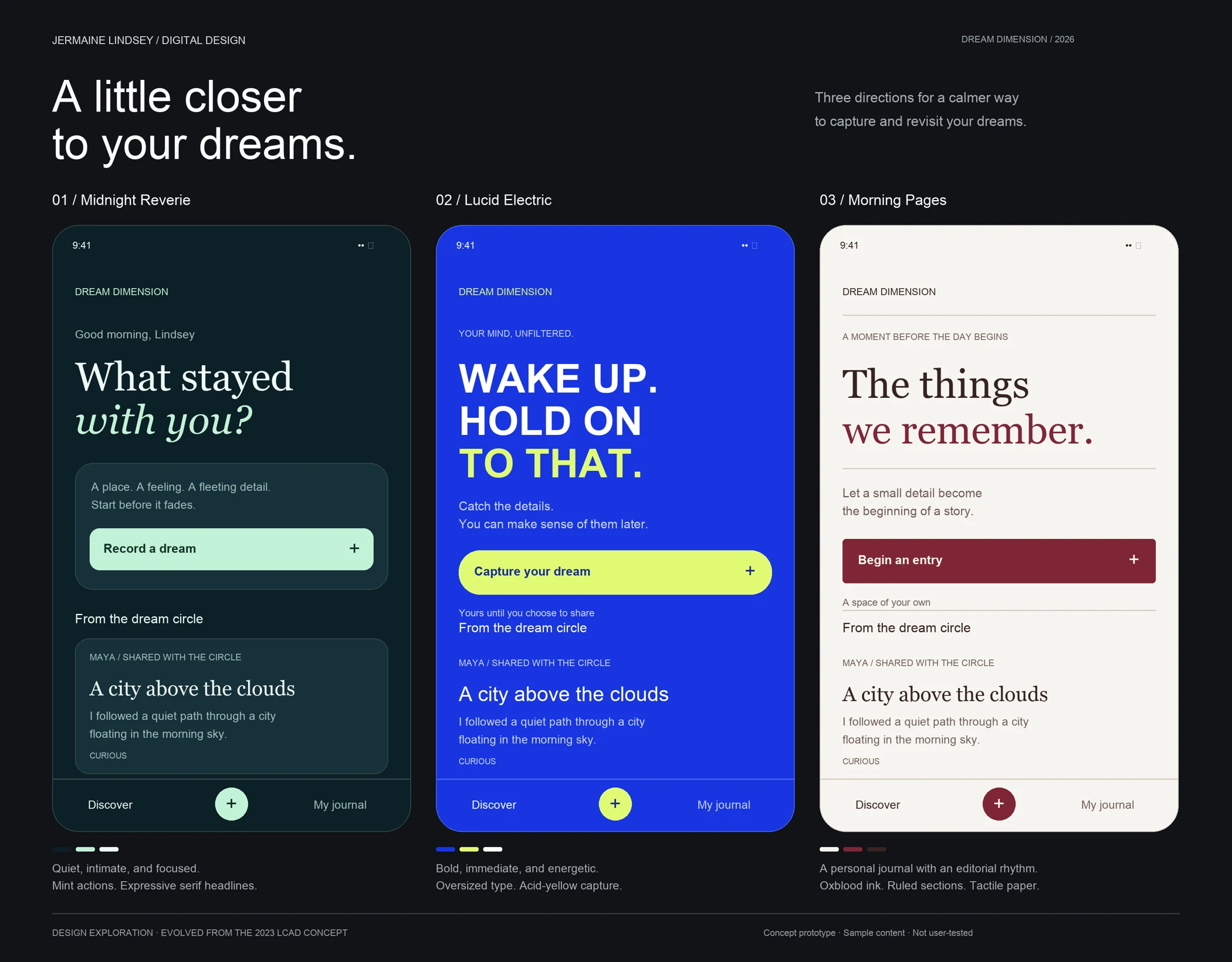
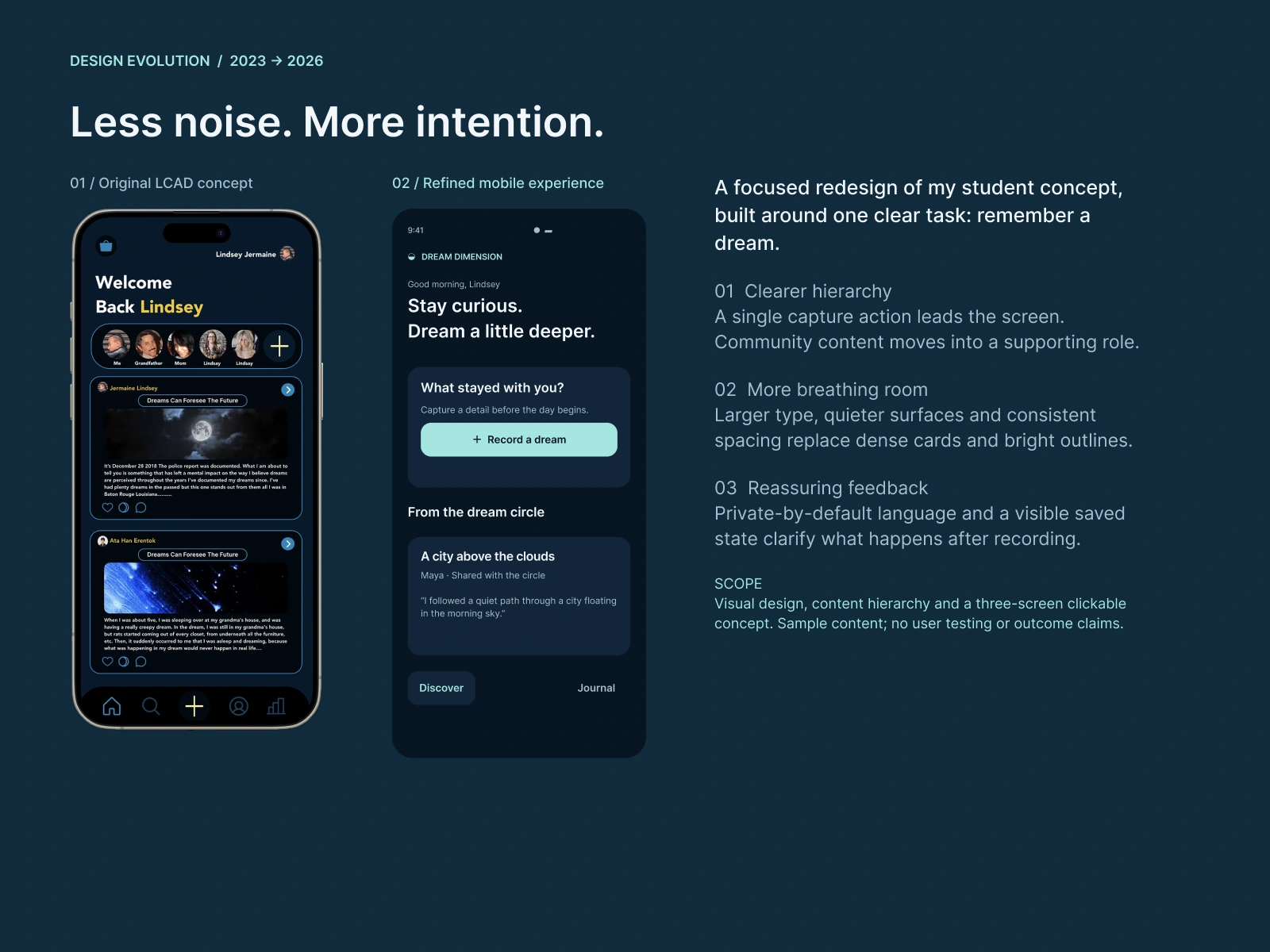
Dream Dimension began as my 2023 LCAD concept. This exploration develops three visual directions around the same core journey: discover a story, capture a dream, and revisit it in a personal journal.
Midnight Reverie uses expressive serif headlines and mint capture actions. Lucid Electric makes the interface bolder and more immediate. Morning Pages draws on the rhythm of a personal notebook.
The earlier prototype includes mood selection, entry validation, saved-state feedback, and individual journal entries. Entries remain only for the current page session. This is a design concept with sample content, not a launched or user-tested product.
New process exploration · September 2026. These layout studies extend the existing project; they are not archival wireframes from the 2023 LCAD work.
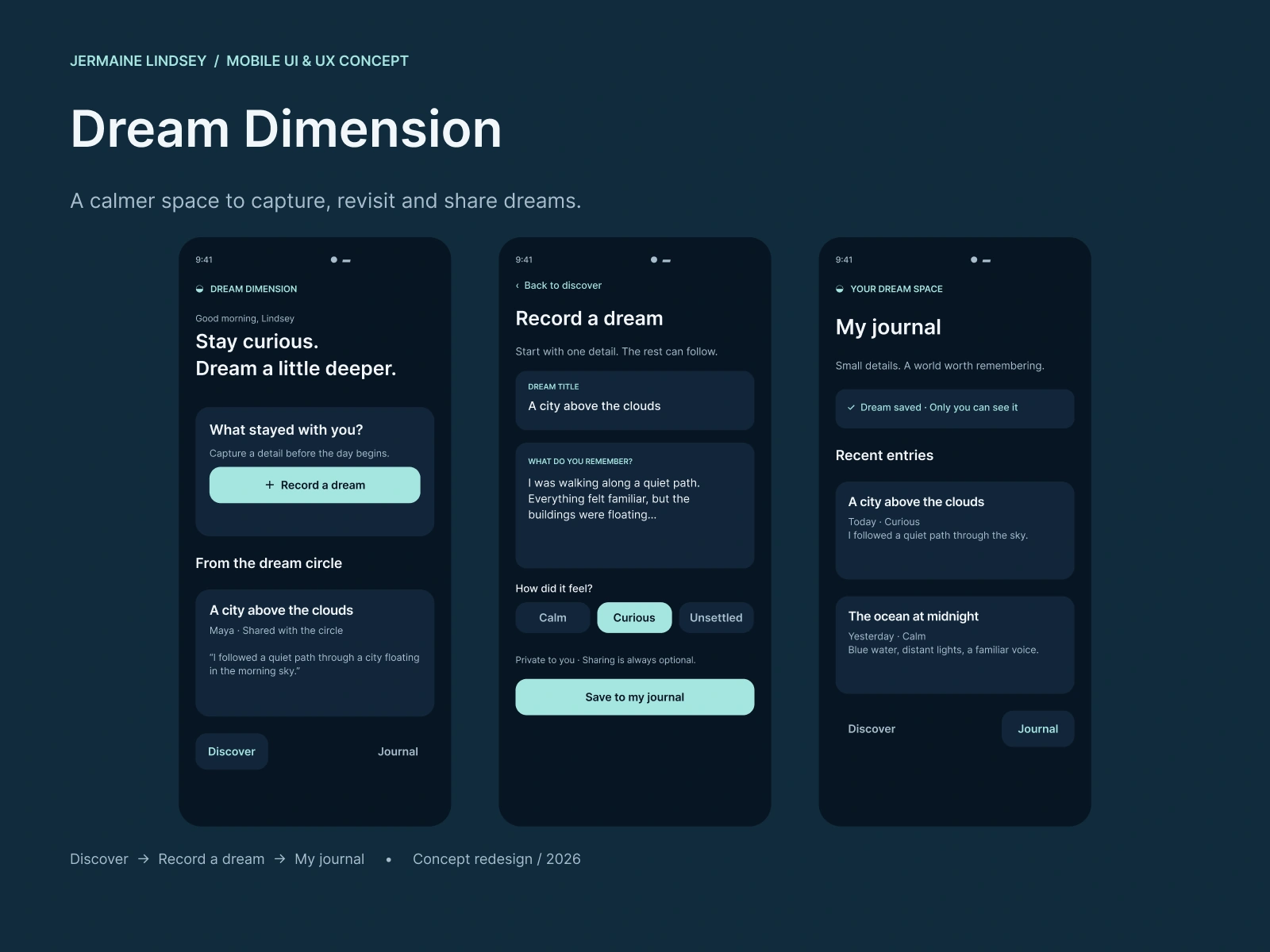
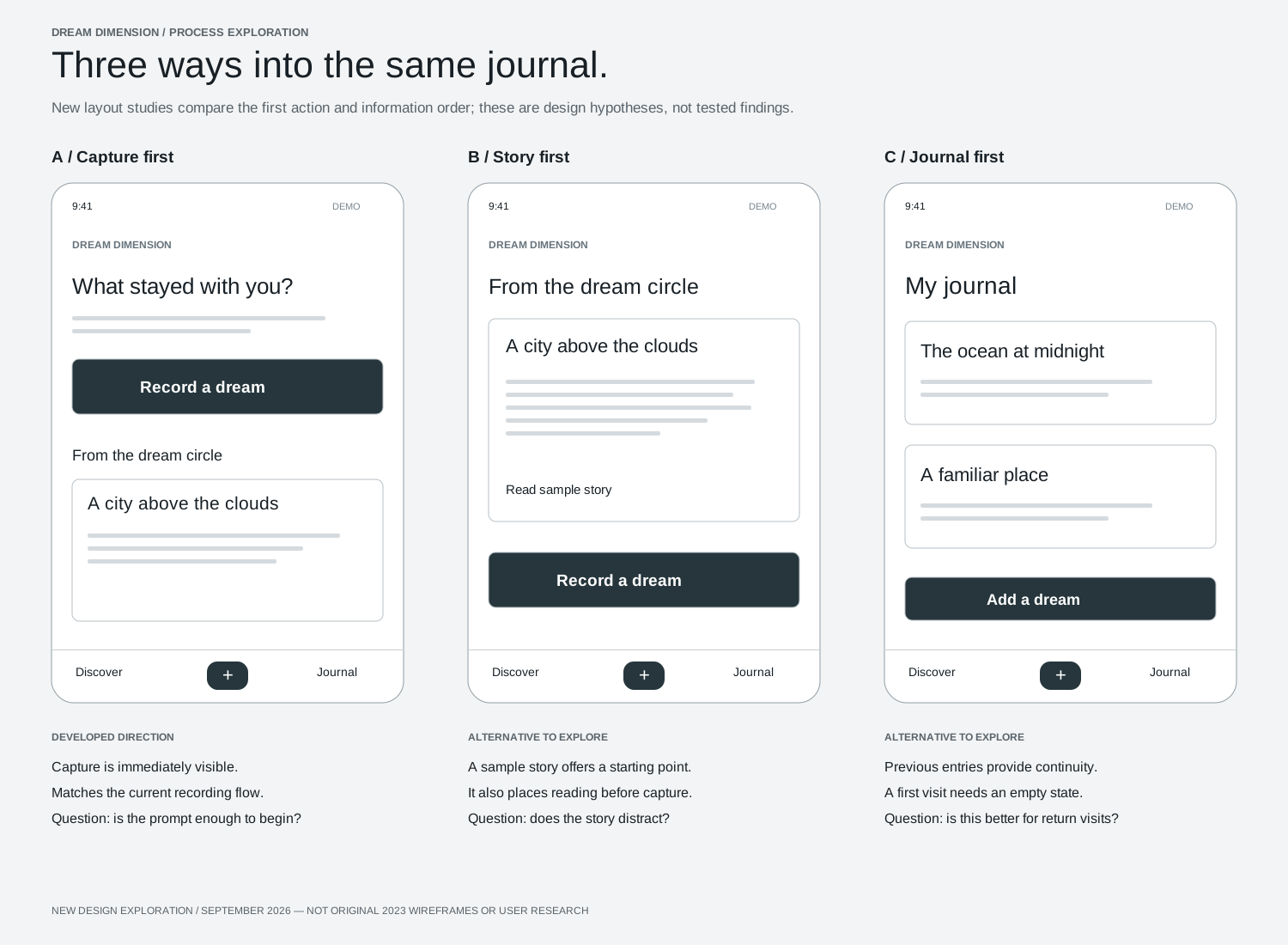
The design question is simple: how can someone begin with a small fragment of a dream and return to it later? The established concept already connects Discover, Record a dream, and My journal. These studies explore the emphasis within that journey.
Capture first makes recording immediately available. Story first provides an example before asking for an entry, but puts reading ahead of capture. Journal first makes past entries central, while creating an unanswered first-visit empty-state question.
The developed direction keeps capture prominent and the sample shared story secondary. This is a design rationale, not a measured usability result.
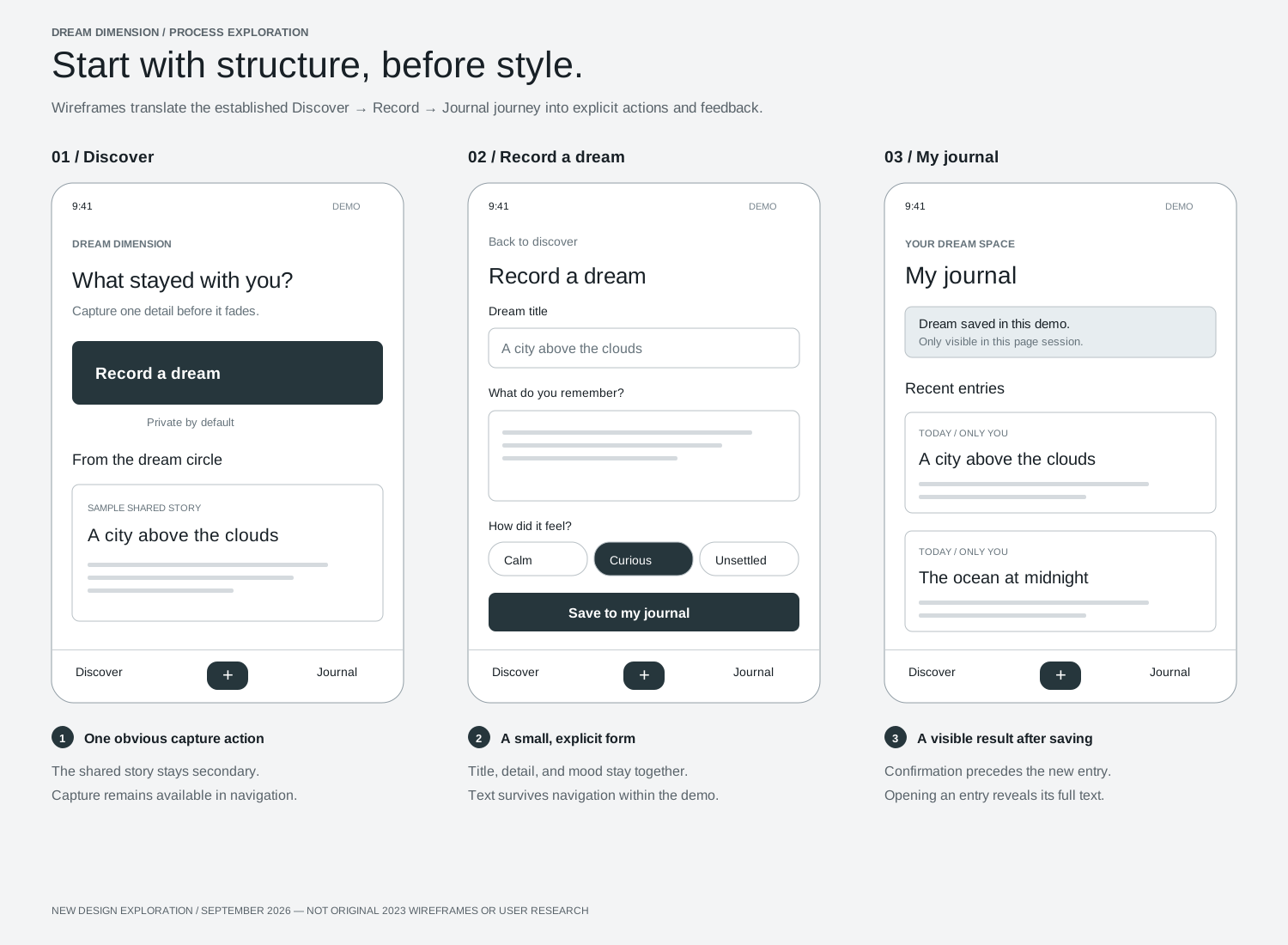
The wireframes separate the core decisions from color and typography: an obvious capture action, a short form, and a visible result after saving.
Discover: the recording prompt leads, with a sample story below it. A persistent capture action remains available in the bottom navigation.
Record: title, dream detail, and mood stay together. Navigating away and back retains the draft during the current page session.
Journal: save confirmation appears above the new entry. Opening an entry reveals its complete text and selected mood.
Midnight Reverie adds expressive serif headlines and a mint capture action to the same structure. Lucid Electric and Morning Pages explore different visual tones without changing the core recording journey.
Missing information: saving without a title or detail shows an inline message and focuses the missing field. Selected mood: the active option is visibly distinct and carries through to the journal. Successful save: the new entry appears with confirmation and can be opened in full.
The earlier three-direction prototype stores entries only in page memory. Reloading resets them. Private-by-default language expresses the concept’s intended experience; there is no account system, server storage, or sharing submission in this demo.
Browser checks covered empty-form validation and saving across all three directions, draft and mood retention in Midnight Reverie, and a 390-pixel mobile layout without horizontal page overflow. These are implementation checks, not user research.
Next questions for a user study: Is the opening prompt enough to begin? Are the three mood choices adequate? Is the session-only saving explanation understood? A first-use empty journal and optional sharing controls remain future design work.
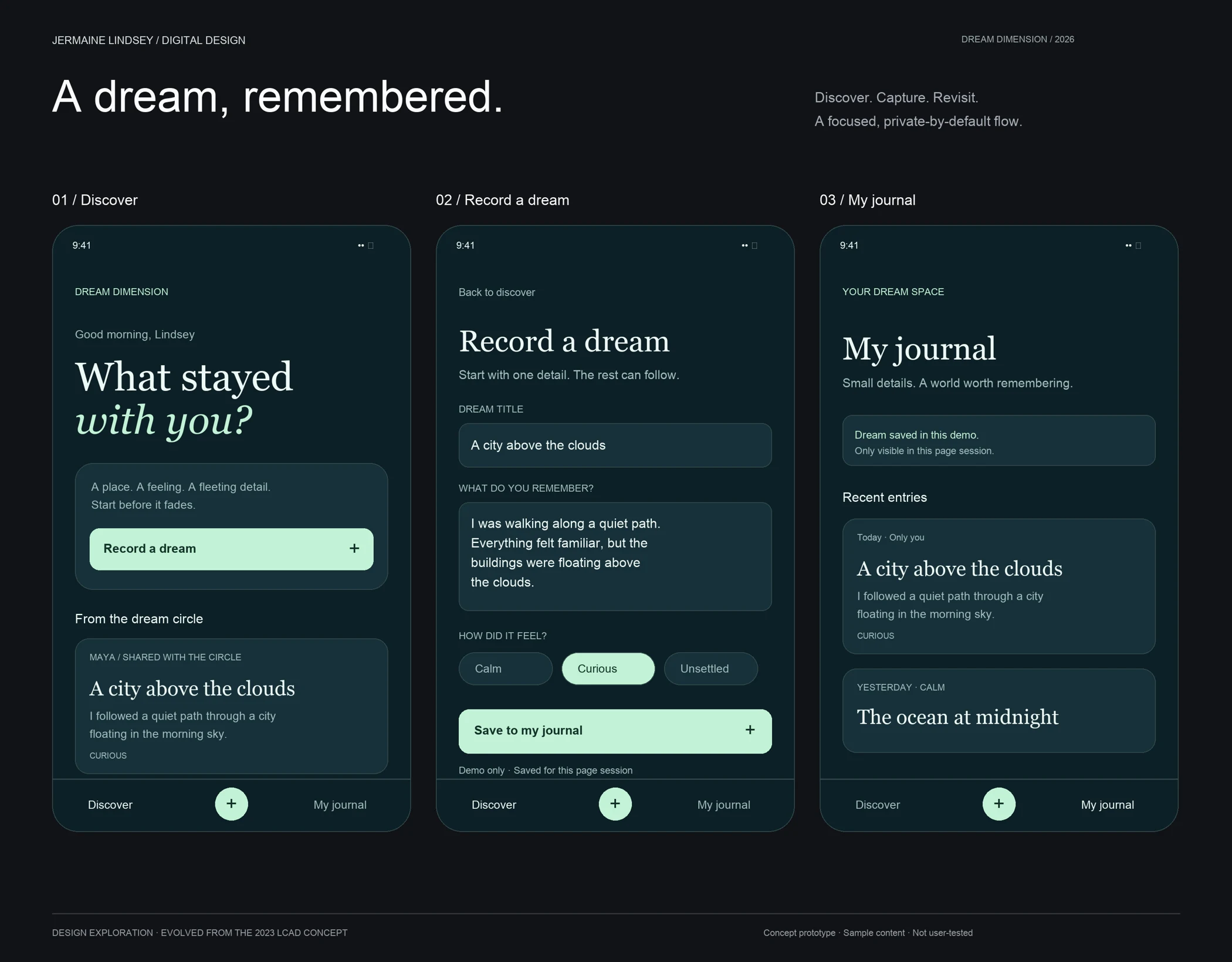
The earlier concept established the three-screen flow, a clear capture action, and private-by-default language.
Explore the original Figma design